01 / HOW IT WORKS
The search-appearance audit process
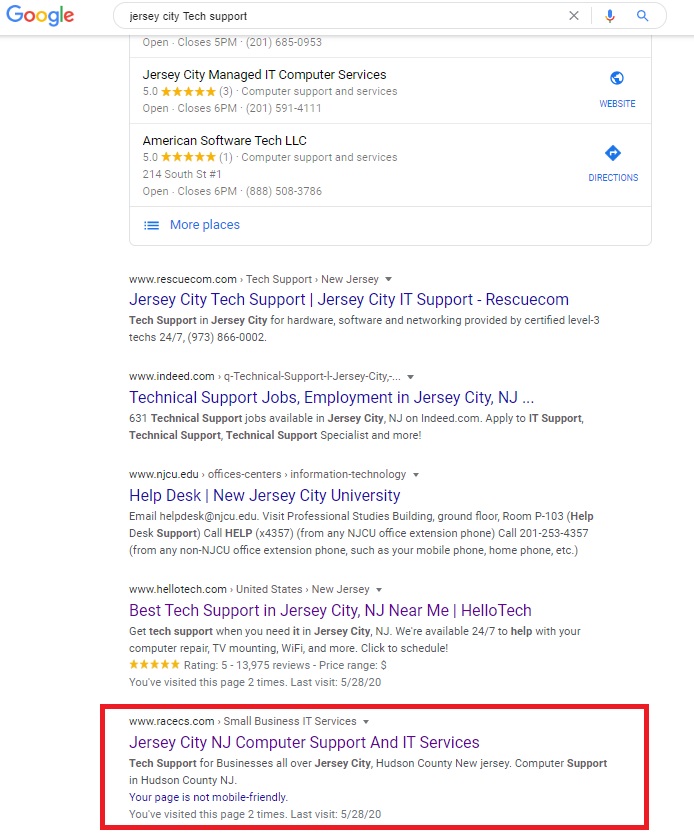
Record what was actually shown, compare it with the destination and use the evidence to choose a bounded change. A single search observation does not establish a ranking trend. This is a search-appearance audit using Race Computer Services as the example. It preserves the Google result observed for “Jersey City IT Support” and compares that wording with the live destination’s title, description and main heading.
- 01
Record the result and its context.
Keep the exact search phrase, the date, the displayed title and snippet, and the destination URL. Preserve a screenshot when it is available. For this example, the observed title is Unlimited Tech Support Jersey City. That record belongs to one search check and should remain separate from subsequent observations.
The result: A dated search-result record tied to an exact query and URL.
- 02
Compare Google’s wording with the page.
Read the actual title element, meta description, main heading and visible copy. Google’s observed snippet here differs from the meta description. Check whether the result accurately describes the page and whether the page delivers what that wording leads a visitor to expect before deciding what to edit.
The result: A comparison of displayed search wording and destination-page content.
- 03
Choose the change the evidence supports.
If the page’s own wording is inaccurate, update it to match the real offer. If the page is accurate but the search appearance raises questions, inspect query and page data in Search Console and record the proposed adjustment. Keep a dated before-and-after record; do not promise that Google will display the exact wording supplied.
The result: A specific page-change brief with the reason and the evidence attached.
- 04
Review performance beyond one search check.
After a published change has been processed, review the same page and relevant queries over comparable periods. Consider search clicks alongside confirmed enquiries and changes in demand or campaigns. Keep historical screenshots as context. They can document earlier wording, but cannot prove a current position or the cause of later results.
The result: A follow-up review that distinguishes observation, page changes and business outcomes.
These examples show how useful pages connect. Links help visitors navigate; they do not guarantee search positions.